Here are my predictions for the 26 countries of Eastern Europe (including Russia, the Balkans and the surrounding neighborhood) plus the Middle East and North Africa.
Last year, 18 of these countries sent films....This year, we may actually see up to 20, since I think we may see a debut from Eastern Europe (Montenegro?) and the return of one of the Middle Eastern countries (Iraq?). Sadly, I don't see Iran returning this year, although I hope they do.
MOST LIKELY TO ENTER: Lots of these countries submit every year....ISRAEL is most likely since they automatically send their Ophir winner, although Croatia, Russia and Serbia have submitted every year since at least 1994.
LEAST LIKELY TO ENTER: Grumpy BELARUS, which last sent a film in 1996.
MOST LIKELY TO GET AN OSCAR NOMINATION: There are some definite contenders (Palestine, Romania) but I'm going to predict the Dark Horse from SERBIA.
 1. ALBANIA- "Agon" Albania's most likely submission is “Agon”, a controversial, violent film about two Albanian brothers trying to adjust to life as migrants in Greece. One brother attempts to assimilate, while the other gravitates towards a life of crime. As far as I know, it’s Albania’s only fiction feature this year, although they also have “Anija- The Boat”, a documentary about Albanians fleeing the collapsing Communist regime in the early 1990s on treacherous boats to Italy. It recently won Best Documentary at Italy’s David di Donatello Awards. Albania has entered five years in a row and will probably enter. I predict “Agon”.
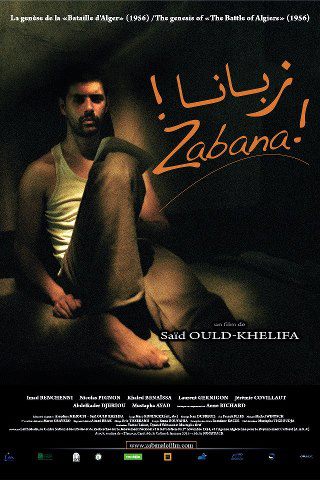
 2. ALGERIA- "Yema" Algeria, in a fair world, would submit Merzak Allouache's “The Repentant” (Cannes 2012), a critically acclaimed drama about a former jihadist who faces anger and resentment when he returns to his village after accepting a government amnesty. However, the controversial subject matter and Allouache’s censorship problems with Algerian authorities will probably prevent that from ever happening. I don’t think “Repentant” has even been able to screen in Algeria. The Algerian nominee is thus probably going to be “Yema” (Best Director at Dubai 2012, also played at FESPACO), a film revolving around intrigues and conflicts within a Kabyle (Berber) family led by a grim matriarch, immediately after the death of one of her sons. Reviewers compare it to a Berber version of a Greek tragedy. Other possibilities include a pair of European co-productions about Algerian homecomings: “Perfumes of Algiers” (with Italy), a drama about a sister who returns from France after her brother is arrested for terrorist activity, and “Born Somewhere”, a French comedy co-starring Jamel Debbouze ("Amelie", "Days of Glory") about a French-Algerian (not Jebbouze) who goes to Algeria for the first time after the death of his father. I’m hoping for “The Repentant” or “Born Somewhere”, but I have a feeling this will go to “Yema”.
 3. ARMENIA- "I'm Going to Change My Name" Armeniasubmits infrequently (four obscure films since their 2001 debut) but they just celebrated the the 10th anniversary of their National Film Festival, and they inaugurated their first annual National Film Awards in 2012 so I think we'll begin seeing them more regularly. This year, I predict they send "I'm Going To Change My Name" (aka "It's Not Me"), the winner of the local Armenian Oscars (the Hayak Awards) and one of two Armenian films competing in the Main Section of the Golden Apricot Film Festival. It's a thriller about virtual dating, about a lonely young woman who meets a potentially dangerous man on the Internet. I was originally going to choose "Voice of Silence", an abstract drama about a recently returned émigré from America on a road trip with a very unattractive woman. It was made by a well-regarded previously submitted director (Vigen Chaldranyan) who keeps company with the Armenian President, but the trailer consists mostly of the two of them beating on drums. It really looks bad. Armenia sent a documentary once, so I wouldn’t count out “The Endless Return”, a feature-length documentary about the Armenian diaspora and their connection to the motherland. Less likely: Historical biopic “Garegin Nzhdeh” looks stunning but reviews weren’t as strong as the other films, “Paradjanov” is the biopic of a renowned Armenian film director but it's a Ukrainian co-production, "Wandering", an odd little rock opera, played at the Golden Apricots but it wasn't selected for the Main Competition. My prediction: “It’s Not Me", followed by "Voice of Silence" and “Endless Return”.
 4. AZERBAIJAN- "Ambassador Sübhün" Azerbaijan has become a semi-regular participant recently, submitting four films since their 2007 debut. They’ve also been pouring a lot of their oil money into the arts (film, theatre, sports, and of course Eurovision!) and you can now watch some of their recent films for free online. This year, I predict they send “Ambassador Sübhün”, a 19th century biopic of a renowned writer and statesman. In second place should be “Steppe Man” (aka Çölçü ), a languorous look at the life of a shepherd living in a remote rural area, and his quest to find a bride after his father’s death. It has represented Azerbaijan at a number of international film festivals (including Georgia, Italy, Kazakhstan, Tajikistan).
 5. BELARUS- "To Steal Belmondo" Belarus sent two Jewish-themed films in the mid-1990s shortly after independence (although neither was directed by a Belarusian), but they’ve been absent since 1996. “In the Fog”, a drama about a man suspected of Nazi collaboration by the Communist resistance in 1942 Nazi-occupied Belarus, competed for the Palme d’Or at Cannes 2012. It is set in Belarus and directed by a Belarus-born (but Russian-based) filmmaker, but it is clearly a Russian-majority production. Belarus also had two features showing at the Listopad Film Festival in Minsk, namely spy thriller “Saltpeter No. 7” and intriguing comedy “To Steal Belmondo” (aka "Stealing Belmondo"), about a man whose trip to Paris, France accidentally lands him in the tiny rural village of Paris, Belarus. They won’t enter of course, but for the sake of completion, I’ll predict “Belmondo”.
 6. BOSNIA-HERZEGOVINA- "An Episode in the Life of an Iron Picker" Bosnia is almost certain to choose the awkwardly titled “An Episode in the Life of an Iron Picker”. Though it sounds like a Soviet documentary from the 1970s, it’s actually the latest drama from Danis Tanovic who won the Foreign Oscar for “No Man’s Land” in 2002. It’s the grim tale of a laborer from a Roma (Gypsy) village who can’t afford appropriate medical treatment for his ailing, pregnant wife. It won two awards in Berlin which, combined with his previous Oscar win, makes it a certainty to represent Bosnia. The chief competition is “The Stranger”, a Croatian co-production about a Bosnian Croat conflicted over whether to attend the funeral of a dear Bosniak Muslim friend years after the war (the Bosnians may not consider it to be a true "Bosnian" film). Dark horses: “Krivina”, by a Canadian-Bosnian émigré who left Bosnia during the war as a child, and “For Those Who Can Tell No Tales” by Bosnia’s second-most acclaimed director (after Tanovic), Jasmila Zbanic, which may run into language issues (the lead is Australian) and may not premiere before the September 30 deadline. We may also see an unknown new contender debut at the Sarajevo Film Festival in August, (perhaps upcoming family drama "Berina's Chakras")
 7. BULGARIA- "Colour of the Chameleon" Bulgaria‘s two usual precursors are the Best Bulgarian Feature at the Sofia International Film Festival (SIFF) and Best Picture Award at the Bulgarian Film Awards. This year’s biggest film at international film festivals has been the peculiar “Colour of the Chameleon”, a somewhat abstract comedy-thriller about a Bulgarian spy and his antics making life difficult for people before and after Communism. It’s supposed to be very weird, but it won Best Picture at the Bulgarian Oscars and its fans say it’s a lot of fun. “Colour of the Chameleon” lost the SIFF award to “Alienation”, a drama about a Greek family who cross the border to Bulgaria in order to buy a baby but who end up sitting out a storm with the family, waiting for it to be born. I’m predicting “Colour of the Chameleon”, which has gotten more play internationally. Although Bulgaria has traditionally chosen the SIFF winner, they haven’t done so the past three years. If they opt for something else, it’s most likely to be either “July” (Moscow 2012), about three women (including a trafficking victim) who encounter violence and corruption at a seemingly idyllic resort, or “Sunny Side”, a Bulgarian "Brigadoon" about a church that periodically re-emerges from a flooded plain. Unlikely but possible: the other main nominee from this year’s Bulgarian Oscars, “I Am You”, about the life of a 90-year old woman, and Russian co-production, “Incognita” about life at the opera. Not eligible: I’ve heard warmly received comedy “Migration of the Belted Bonito” appeared on television before cinemas. Fun but impossible: the Bulgarian “Pistol, Briefcase and 3 Stinking Barrels”, a parody (copy?) of the British film “Lock Stock”. Not finished: “The Judgement, directed by Stephen Komandrev who got Bulgaria its first-ever slot on the Oscar shortlist, will probably represent Bulgaria next year for its story of a border guard haunted by memories of killing an East German couple fleeing Communism.
 8. CROATIA- "Halima's Path" Croatia’s national cinema is traditionally one of the weakest in Eastern Europe (and former Yugoslavia). Since independence, Croatia has produced a modest number of arthouse pieces, most of which were barely seen inside or outside Croatia. Things are turning around. In the past six months, Croatia has seen the Top 2 domestic box-office hits since independence, namely comedies “Sonja and the Bull” and “The Priest’s Children”. The Pula Film Festival this month is showing a record 14 new local films. And, a few weeks ago, Croatia joined the European Union, meaning they will now be invited to EU Film Festivals and more doors will be open to co-productions with the richer countries of Western Europe. This year, I predict the Croatians will elect drama “Halima’s Path” to the Oscars. It's about a Bosniak woman desperate to identify the remains of her son killed during the war but who refuses to submit to a DNA test in order to conceal the fact that she is not his biological mother. Director Arsen Ostojic has repped Croatia twice before, and “Halima” has been well-received by critics abroad. The only downside is that the film is a Bosnian co-production (like another contender “The Stranger”) and the Croatians may not consider it as a genuinely local film…but I think Ostojic's credentials will be enough to qualify for the Croatian nod. If not, I think they’ll choose hit comedy “The Priest’s Children” about a priest furious at lax attitudes towards Catholic dogma on contraception and who then gleefully sabotages a town’s condom supply, resulting in a huge baby boom. Director Vinko Bresan has also repped Croatia twice and the film is more "Croatian" than "Halima". Two other dark horses: if the Croatians go sentimental, they may want to choose “Flower Square”, about a family targeted by the local mafia. It was the final film of Krsto Papic who just died this past spring....Or there's “A Stranger” (another Bosnian co-production, this time made by a Croatia-based Bosnian Croat), about a Croat unsure of whether to attend the funeral of a dear old Muslim friend. We also may see some new contenders among the winners of this month's Pula Film Festival which concludes July 27, although many winners won't premiere in Croatian cinemas until after the deadline. The most promising look to be village comedy "Handymen" and thriller “Not All About the Money” about a couple who will be killed if they don’t pay a debt in seven days. Unlikely to premiere in time: “Bridge at the End of the World” (war refugees). I don’t particularly expect last year’s abstract Pula Best Picture winner (“Letter to My Dad”) or popular rom-com “Sonja and the Bull” to figure in.
 9. EGYPT- "Chaos Disorder" Egypt began submitting films to the Oscars in 1958 but they haven't had any luck so far. Since the Arab Spring, their film industry has been in a state of flux- secular nationalist censorship by the Mubarak government was replaced by pseudo-religious censorship by the Morsi government and after last week's "people power overthrow/military coup d'etat", who knows what will happen? Last year Egypt didn't send a film at all, despite a number of possibilities. Variety speculated that the reason was that the front-runner, “After the Battle” (released 9/28/2012), presented a controversial version of the Arab Spring. I’m unsure if Egypt will return this year but if they do, I’m predicting “Chaos Disorder” which won the Arab Special Jury Prize in Dubai 2012 and which is not overtly political or offensive to anyone. It’s also one of a number of strong new Egyptian films directed by women. “Chaos Disorder” is a love triangle set in a lower-class Egyptian neighborhood, where two local boys fight for the hand of a neighborhood “princess”. Two other films have been prominent on the international circuit this year, though both have received mixed reviews. “Winter of Discontent” (Venice, Cairo, Dubai) takes place in the years leading up to the Arab Spring and has secured domestic and some international distribution but most critics say the film is already outdated. “Coming Forth by Day” (Abu Dhabi, Carthage, FESPACO) is a slow, slice-of-life film (directed by another woman) about 24 hours in the life of a young Cairo woman. If they want something more “mainstream”, the Egyptians may choose “Mosawer Qateel” (“Blood On My Hands”), a commercial mystery-fantasy-thriller about a man trying to solve the murder of his wife with the help of a mysterious camera, or “Asham”, an arty film (by another woman) about the intersecting lives of a number of young adults in Cairo. My prediction for the Top Five: “Chaos Disorder”, “Winter of Discontent”, “Mosawer Qateel”, “Asham” and “Coming Forth by Day”.
 10. GEORGIA- "In Bloom" Georgia has two movies this year that have gotten some international critics talking about a possible “Georgia New Wave”. I think “In Bloom”, winner of several of the main prizes in Hong Kong (and featured in Berlin Forum) is easily the front-runner. “In Bloom” has gotten warmer reviews than the main competition (“A Fold in My Blanket”) for its story of two adolescent girls living a normal life of boyhood crushes and schoolyard dilemmas, juxtaposed against a background of abnormal historical events, namely Georgian independence and the civil war in Abkhazia. “A Fold in My Blanket” was prominently featured in Berlin but most reviews for this “Twin Peaks" redux of strange events in a small town have not been kind. A few upcoming releases could compete if they turn out to be good- “Dzma" is the story of 12- and 16-year old brothers growing up in the troubled 1990s and it has a better chance than sci-fi drama “The Parts” or intriguing Estonian co-production “Tangerines” about an ethnic Estonian village forced to take sides when ethnic conflict breaks out between rival Abkhaz and Georgian belligerents.
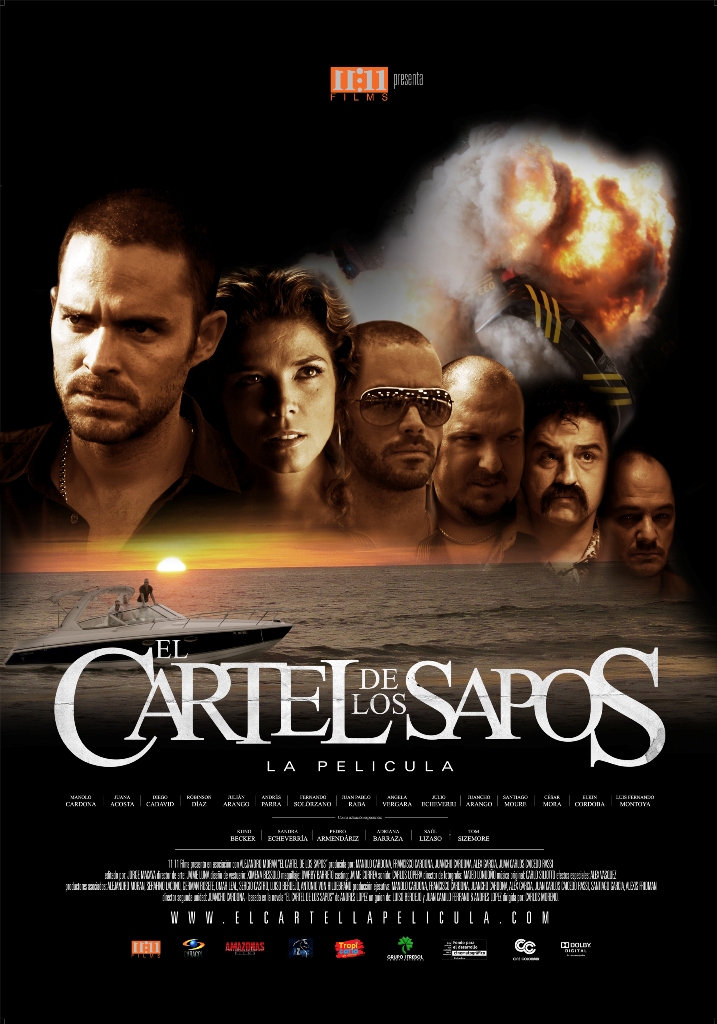
 11. GREECE- Official Academy Award Submission- "Boy Eating the Bird's Food" Greece became the first country to announce their Oscar submission in April when they predictably chose “Boy Eating the Bird’s Food”, an independent drama about an impoverished young man living in modern-day Athens. It won Best Picture at the Hellenic Film Awards and the main award for Greek films at the Thessaloniki Film Festival (winning this award used to automatically qualify the film as the Greek Oscar nominee). This surreal, arty film- which features the boy eating his own semen- won’t have much luck in Hollywood. The chief films disappointed by the pick are the probable runner-up “The Daughter” (Berlin 2013, Best Director/Screenplay at the Hellenic Film Awards), about a teenaged girl in who kidnaps a neighbor child for revenge, as well as “What If”, a surreal hit romantic drama about a series of coincidences that lead to the fateful meeting of a man and woman in Athens. They also could have selected “JACE”, a stylish thriller about a 7-year old whose foster family was massacred, or “ACAB”, about a young anarchist woman. “JACE” won many of the tech awards at the Hellenic Film Awards and (though I haven’t seen it) sounds like the best film of the five. Unsurprisingly, all of these films deal to some extent with modern life amidst Greece’s current economic crisis.
 12. IRAN- "Restitution" Iran boycotted the Oscars last year, marking the first time ever that I know of in which a country didn’t send a film for exclusively political reasons. The Iranians were clearly divided last year. They issued statements to the press in quick succession indicating first that (1)- they were considering a boycott, (2)- then confirmed that they would send a movie anyway (“A Cube of Sugar”), and then finally (3)- that they would boycott unless AMPAS issued an apology for a Youtube video made by an Egyptian in the United States maligning Islam. The big question is now whether the Iranians will continue their silly boycott, or rejoin the Oscar family. Despite poisonous relations with the US, Iran participated in the Oscars every year between 1997 and 2012, making them one of only seven non-European nations to do so (friendly Argentina, Brazil, Canada, Israel, Japan, Mexico and Taiwan are the others). So, this year the Iranian nominee will depend on two things: (1)- will they participate at all?, (2)- if they do, will they choose a festival favourite like “A Separation”, or a domestic protection that better conforms to Iranian government-sponsored values? With Iran still bitter about "Argo" winning Best Picture and probably also annoyed at dissident director Jafar Panahi’s invitation to AMPAS membership this year, I think Iranian participation is iffy at best, and that the chances of them selecting a popular festival movie is pretty low. If they chose fairly, it would probably be “The Last Step”, a quiet domestic drama starring Leila Hatami (the wife in “A Separation”) as a middle-aged, widowed actress whose deceased husband plays the other lead role. Should they rejoin, I think the Iranians will choose a more blatantly nationalist film, instead of their usual small, intimate family dramas. The two big winners at the Fajr International Film Festival (the closest Iran has to a national film awards) were “Restitution” (aka “Refund” or "Give Back"), about the Allied occupation of Iran during World War II, and “Rule of Accident”, a family drama about a theatrical troupe of actors. “Rule of Accident” won the International Competition, though it was mostly ignored in the domestic Iranian Competititon (it won Screenplay). The winner there was “Restitution”, which was nominated in nearly every category. “Berlin 7”, an anti-Western film about an Iranian refugee facing anti-Islamic sentiment in Germany may be the sort of anti-Western film they're looking for (though maybe the refugee angle will annoy them?). A few other options including “Painting Pool” (co-winner of the Audience Award in Fajr), about a pair of handicapped parents trying to raise a family, “Darband”, which won Best Director for its social drama of a single woman living in a boarding house, “Parviz”, about a lazy Iranian slacker, and “Sinners”, a film noir murder mystery about a woman murdered after returning from the United States. You can forget Asghar Farhadi’s latest French-language film and any film that has a controversial plotline like “Scandal” (clerics) or “Hush, Girls Don’t Scream” (child sexual abuse) or anything by a director who has pissed off the mullahs (previously selected artistes like Bahman Ghobadi and Jafar Panahi ). I’m going to be surprised if Iran enters (the theme of cinematic seminars at Fajr were "combating negative Western and Zionist influence!), but if they do I predict “Restitution”. My alternates are “Painting Pool” and “The Last Step”.
 13. IRAQ- "Bekas" Iraq has little in common with the peaceful Kingdom of Belgium except that both have two distinct, ethnic-based and very separate film industries. In Iraq, it’s clearly the minority Kurdish region that has been producing the best films, with Iraq represented this year at “Arab” film festivals solely through Kurdish-language works. They even got their own sidebar at Karlovy Vary this year! Although both the Arab and Kurdish halves of Iraq have begun dedicating increasing government resources to producing new films, it is the Kurds who have harnessed the input of the large Iraqi Kurdish diaspora and partnerships with the international co-production market. This year, the Iraqi Kurds have been well-received at Tribeca (Norwegian co-production “Before Snowfall”, about honor killings), Dubai (French co-production “Shirin”, about a pair of star-crossed lovers, which was the opening film in the Iraqi Kurdish capital's newly re-opened cinema in January) and even Cannes (French co-production “My Sweet Pepperland”, about a glum former peshmerga warrior adjusting to civilian life). However, the Iraqi front-runner is probably Swedish co-production “Bekas”, the feature-length version of short film “Bekas” which won a Student Academy Award in 2011. The film follows two orphaned boys who decide to emigrate to America (which they presume is a “a few miles away”) and who go in search of the comic-book hero to help them. More of a children’s film than an Oscar contender, I’m hopeful they pick the probable runner-up, “Pepperland”, by Hiner Saleem (who represented Armenia once when Iraq was still under Saddam) and starring exiled Iranian actress Golshifteh Farahani. Dark horse: “111 Girls”, a darkly comic drama about a petition by Iranian Kurdish girls to the Iranian leadership (directed by an Iraqi Kurdish couple) to supply them with prospective husbands. Of note: "Before Snowfall" is also one of the chief contenders for Norway.
 14. ISRAEL- "A Place in Heaven" Israel automatically sends their Best Picture winner at the Ophirs in September (assuming it meets language requirements) as their representative to the Oscars. I predict the five nominees will be “Big Bad Wolves”, a revenge thriller with a dark sense of humor, starring Lior Ashkenazi turning the tables on a child killer, "Fragile", a family drama set in the 1960s, “Hunting Elephants”, co-starring Patrick Stewart as one of a group of elderly jewel thieves planning a big heist,““Inheritance”, the directorial debut of Hiam Abbass, about a Palestinian student who returns to her hometown in the West Bank, “A Place in Heaven” (Karlovy Vary), a complicated and intriguing drama about a race against time to nullify a Faustian bargain, covering forty years of Israeli history. A UK co-production “Zaytoun” starring Stephen Dorff as a marooned Israeli pilot forced to work with a Palestinian refugee to get home will probably nab an Ophir nod if it’s eligible, but it won’t be eligible for the Oscars due to English. I wouldn't be at all surprised if “Not in Tel Aviv”(Locarno 2012), a jet black comedy about a high-school teacher who goes berserk, "Youth" (Berlin), about two brothers from a dysfunctional family, or “She’s Coming Home”, the story of a shy 30-something living at home who becomes involved with a married man, get an Ophir nomination either, but I would be very surprised if they make it to the Oscars. It's a competitive years. A final dark horse is "Mivtza Hamaniya", a historical drama about the Israeli nuclear program (will it be released??) It’s a competitive year!
 15. JORDAN- "Line of Sight" Jordan submitted an excellent film just once in 2008 but they seem to have given up on Hollywood despite a slowly growing local industry. This year’s most likely submission is “Line of Sight” about the armed standoff between a housewife and a car thief, told through flashbacks that slowly tell what brought each of them to this particularly dangerous moment in time. The film has the backing of the Royal Film Commission, but if Jordan ignored Berlinale drama “Last Friday” and popular rom-com “When Mona Lisa Smiled” last year, I'm just not sure they'll enter.
 16. KUWAIT- "Scenario" Kuwait has not sent a film to the Oscars since 1978 and they’re not likely to send anything this year. “Tora Bora” won the top prize at the Gulf Film Fest in Kuwait in May 2012, but it was released domestically in 2011. The only other Kuwaiti film I know about this year is “Scenario”, a thriller about an independent film director who assembles a cast of friends to make a low-budget film which results in a unexpected death.
 17. LEBANON- "Asfouri" Lebanon's biggest film of the year is the amazing drama “The Attack” by Ziad Doueiri, a protégé of Quentin Tarantino. I saw the film at its DC premiere in May, and it’s a fascinating movie about moral dilemmas and secrets, focusing on a successful Israeli-Arab doctor traumatized by the death of his beloved wife in a suicide bombing- only to learn that she was in fact the bomber. Unfortunately “The Attack” was banned in Lebanon because it was filmed partially in Israel with a partially Israeli cast. This renders the film ineligible (and also violates Lebanese laws regarding treason, which have thankfully not been enforced against M. Doueiri). Lebanon has also called on all Arab countries to ban the film (not everyone has signed on….Morocco, which doesn’t recognize Israel, awarded the film the Grand Prize at the Marrakech Film Festival, and it also played in Dubai). I don’t think Lebanon will enter the contest this year (they didn’t last year, even though they had the popular “Heels of War”) although they do have a few eligible films. The front-runner is “Asfouri”, a drama in Arabic and Armenian, about an apartment building which witnesses numerous stories over the course of Lebanon's 15-year civil war. It got better reviews than “Blind Intersections”, a drama about a series of interlocking stories and characters. If they want to do something more unusual they could send feature-length documentary “The Lebanese Rocket Society” by a pair of previously submitted directors, but I think it’s “Asfouri” or nothing.
 18. MACEDONIA- "Balkan Is Not Dead" Macedonia's clear front-runner is “Balkan Is Not Dead”, a period drama set in 1905 about life in Macedonia just before the collapse of the Ottoman Empire. Photos from the movie look quite lavish and Macedonia chose a similarly-themed historical drama last year. Ironically, its key competition comes from another historical drama set circa 1905, and focusing on a love “quadrangle” between a Balkan rebel, a local gentleman and a Turkish soldier with a cosmopolitan European woman. This one, “To the Hilt” is directed by one of Macedonia’s most respected directors (Stole Popov) and seems a bit more coarse than "Balkan" (the English-language tagline for the movie is “Fuck lifeif you are not ready to die for it”). It’s also unclear whether it will premiere in time. I give the edge to “Balkan” even if they are both released (Macedonia tends to premiere their nominees in September). Unlikely: “The Piano Room”, a modern-day abstract drama about the various people who visit a particular hotel room.
 19. MOROCCO- "God's Horses" Morocco has had a strong film year, and their Oscar submission will be the winner of a two-way race between two films that have been jointly doing Morocco proud on the film festival circuit (often competing against each other). “God’s Horses” premiered at Cannes 2012 and played at international festivals for over a year before opening in Moroccan and French cinemas in February 2013. “Horses” is a critically acclaimed and very topical drama about how impoverished youth from the slums of Casablanca were recruited and convinced to take part in the terrorist bombings that hit the city in 2003. “Zero” is a stylish (and violent) film noir about an alcoholic cop trying to bust a child prostitution ring. “God’s Horses” has wowed the international critics, while “Zero” has dazzled the domestic ones. "Zero" won Best Moroccan film (over “Horses” and others) at the Tangier International Film Festival. Both were commercial successes in Morocco (but “Zero” was a bigger hit) and both directors have been selected to represent Morocco before (Ayouch in 1998 and 2000, Lakhmari in 2009). A possible dark horse is all-star funeral dramedy “Rock the Casbah” (co-starring Hiam Abbass of “The Visitor”, Nadine Labaki of “Caramel” and Lubna Azabal of “Incendies”) which will open in September. Movies like “Malak” (about the stigma of being a single mother in Moroccan society), “Road to Kabul” (a hit comedy about four aimless 20-somethings who end up in Afghanistan when they try to illegally emigrate to Europe) and “Miscreants” (a troupe of actors are kidnapped by Islamists) have a slight chance, but are unlikely. The same goes for child abduction drama “Sack of Flour”, by a Belgian-Moroccan director (Morocco made it to the shortlist with “Omar Killed Me”, a European co-production). Like last year, I’m keeping my prediction as “God’s Horses”.
 20. PALESTINE- "Omar" Palestine has the easiest decision of any of the 104 countries in the competition this year. “Omar” is the first Arabic-language film made by director Hany Abu-Assad since Palestine received its their only Oscar nomination for “Paradise Now” (which is still the only non-Arab country- bar Algeria- ever to be nominated for an Oscar). Add the fact that it won the Jury Prize in the Un Certain Regard competition at Cannes 2013, and that it's also the first film to be made almost entirely with local Palestinian funds. The Palestinians are sure to choose this drama about the hardships imposed by the Israeli occupation on a pair of lovers in the Gaza Strip.
 21. ROMANIA- "Child's Pose" Romania finally made it to the Oscar shortlist last year after entering films without any success since 1966. “Beyond the Hills” probably came in seventh place last year (out of 71…the largest field ever), just missing out on Romania’s first Oscar nomination. The Romanian Academy has a pretty easy choice this year- it will certainly be “Child’s Pose”, the winner of the 2013 Golden Bear in Berlin, and a film that bears certain similarities to the Oscar winning “A Separation”. In the film, Luminita Gheorgieu (“Death of Mr. Lazarescu”) plays a wealthy, high-society mother who will stop at nothing to exonerate her (guilty) son, who has just killed a child in a automobile accident. This “moral dilemma” drama has gotten great reviews, won a major film festival and could very possibly finally net Romania their overdue first Oscar nomination. I consider “Child’s Pose” to be a lock, but if you’re looking for alternate choices, look no further than two films by previously submitted directors- “Domestic” is a comedy about an apartment building arguing over the status of a pet dog, and “Rocker” is about a 40-year old ex-hippie, who is taking care of his young son. Less likely is comedy “Chasing Rainbows” (which got a Best Pic nom at the National Gopo Awards). While these are all possible, I don’t think anyone from Romania will be able to dislodge (or even seriously challenge) “Child’s Pose”.
 23. SERBIA- "Circles" Serbia probably made a mistake last year by sending well-meaning but overwrought drama “When Day Breaks” instead of super-fun gay-pride comedy (and surprise box-office blockbuster) “The Parade”, which was one of my favorite films of the year. Serbia (controversially) changed its rules last year to specify that film producers had to pay a fee to be considered for the Oscars; in previous years all Serbian releases were evaluated. So, what Serbia selects will depend in part on who ponies up the 300 euros! Half of Serbia’s eligible films seem to rely on the same tropes (the aftermath of 1990s Balkan wars; or three intersecting stories). The probable candidate is “Circles”, a chilling take on “Six Degrees of Separation” by the director of the outstanding “Klopka/The Trap". During the Balkan wars, a Serbian is murdered by thugs when he tries to save a Muslim man, who survives the attack. Years later paths cross again and revenge is in the cards. Golubovic is a master of morality tales and “Circles” has gotten good reviews. The two runner-ups (in case “Circles” is somehow not submitted for consideration) are likely to be: “The Falsifier”, a drama by respected director Goran Markovic (“Tito & Me”) about a merry counterfeiter and dedicated Communist in 1960s Yugoslavia; and “The Withering”, a Karlovy Vary drama about a man who returns from Belgrade to his village to sell his land and move to Europe. Rounding out the Top Five: “The Whirlpool” (the most likely of the films about “intersecting stories”), a drama set in the turbulent 1990s, and “Barbarians”, about the life of Serbians set against the backdrop of the Kosovo wars. “See You in Montevideo”, the sequel to their 2011 football-themed submission, might come into play if it's released in time. My prediction: “Circles” is the one to beat.
24. TUNISIA- "Hidden Beauties" Tunisia’s film industry has begun to get back on its feet after the country initiated the Arab Spring in 2011, leaving the country with more serious issues than making movies. Tunisia premiered three new local features at their Carthage International Film Festival, and Tunisian films competed in Abu Dhabi, Cairo, Doha, Dubai and Ouagadougou as well. The front-runner is clearly “Hidden Beauties”, a film about two young women struggling to maintain their independence in a male-dominated society and amidst creeping Islamism in the country after the 2011 democratic revolution. It is by one of Tunisia’s most acclaimed modern directors and it won Best Arab Feature in Abu Dhabi 2012. In 2002 (the last year Tunisia competed at the Oscars) however, Tunisia sent an unknown also-ran instead of a critically acclaimed feminist front-runner (“Satin Rouge”), so if feminism bothers Tunisia’s Academy, they’ll probably send “Kingdom of Ants”, about the more politically correct struggles of the Palestinians. Less likely: 1970s political drama “The Professor” although I’m betting on “Hidden Beauties”. Then again, they haven’t entered since 2002, so maybe they’ll just send nothing!
 25. TURKEY- "Beyond the Hill" Turkey's pick is notoriously difficult to predict. The Turks have three major film festivals (Anatalya, Istanbul and Ankara) which all have Turkish Film Competitions, but none of the winners of any of these festivals has been selected for the Oscars since 2003 (when the dreadful “Distant” swept all three festivals and got to represent Turkey at the Oscars). That spells bad news for European immigration drama “Your Beauty is Worth Nothing” (which won the 2012 Antalya competition despite being a majority German-Austrian production) and fantasy drama “Thou Gildst the Even”, about a small, dull town where people have magical powers (Winner, Istanbul 2013). I’d hold out a bit more hope for “Beyond the Hill” (Winner of both Istanbul 2012 and Ankara 2013), an arty movie about the theft of a lamb which erupts into a violent blood feud. It opened in Turkey in December after nearly a year winning awards around the world (including Berlin 2012 and the Asia-Pacific Screen Awards). I consider it to be one of the front-runners. It’s two chief competitors are “Strangers in the House”, a drama about Turkey’s history with long-time rival Greece as seen through the eyes of an 80-year old woman who fled Turkey decades before, and “Watchtower” (Rotterdam/Toronto), a quiet drama (Turkey loves these) about a couple coming together in rural Anatolia. “The Butterfly’s Dream” had gotten great reviews in Turkey for its story of two poets in the 1940s, and 16thcentury period romance “Mahmut & Maryam” looks very pretty but Turkey hasn’t sent a period film to the Oscars since 1999. Other possibilities include: “Cold” (Berlin) about three Russian women living near the Turkish-Georgian border, “The Mountain”, a thriller about two Turkish soldiers trying to survive a terrorist ambush on an isolated mountain, and “Lifelong”, a relationship drama. Highly unlikely: Reha Erdem has been selected before and “Jin” got good reviews, but its controversial Kurdish topic will be enough to knock it out of contention; “Gallipoli”, a big-budget war movie sequel, will confuse those who don't know the history detailed in the first film. Having said that, two of the past four years they’ve chosen a film that was released right before the deadline. None of these movies are jumping out at me, so maybe they’ll do that this year too….This is one of my shakier predictions, but here goes: “Beyond the Hill” represents Turkey, with “The Butterfly’s Dream” in second, and “Watchtower” in third
 26. UKRAINE- "The Guide" Ukrainerejoined the Oscar race after a three-year absence last year. Although they have no particular front-runner, they’ll likely submit a film if they have something that meets the seven-consecutive-day screening requirements, which is sometimes a problem for them. Five films of note: “Eastalgia”- a drama about cross-cultural love stories in Kyiv, Belgrade and Munich- was the only local Ukrainian film in competition at the country’s Molodist Film Festival in Kyiv; “Eternal Return”- a drama about a man who returns to his hometown to meet the two women he loves….it's directed by Kira Muratova, and it won Best CIS/Baltic Film at this year’s Russian Oscars (the third time Muratova has won the award); “The Guide”- a stylish thriller about an American boy and a blind musician in Communist-era Ukraine made by a previously submitted director; “Paradjanov” is the biopic of a famed, abstract Soviet-Armenian filmmaker which has Armenian and Ukrainian co-directors; and “Strong Ivan”, a family-friendly biopic about an early 20th century circus strongma....it's said to be one of the most expensive Ukrainian films ever made, but I predict it won’t be released in time. Dark horses include “Backstreet Champions”, a football drama about a tournament for the homeless, “Dreams in Plasticine”, a thriller about a young girl who falls in love with her good-looking, 20-something neighbor and “Goodbye Ukraine”, an omnibus of short films. My prediction: “The Guide” pips “Eastalgia” to represent Ukraine.

Last year, 18 of these countries sent films....This year, we may actually see up to 20, since I think we may see a debut from Eastern Europe (Montenegro?) and the return of one of the Middle Eastern countries (Iraq?). Sadly, I don't see Iran returning this year, although I hope they do.
MOST LIKELY TO ENTER: Lots of these countries submit every year....ISRAEL is most likely since they automatically send their Ophir winner, although Croatia, Russia and Serbia have submitted every year since at least 1994.
LEAST LIKELY TO ENTER: Grumpy BELARUS, which last sent a film in 1996.
MOST LIKELY TO GET AN OSCAR NOMINATION: There are some definite contenders (Palestine, Romania) but I'm going to predict the Dark Horse from SERBIA.
 1. ALBANIA- "Agon" Albania's most likely submission is “Agon”, a controversial, violent film about two Albanian brothers trying to adjust to life as migrants in Greece. One brother attempts to assimilate, while the other gravitates towards a life of crime. As far as I know, it’s Albania’s only fiction feature this year, although they also have “Anija- The Boat”, a documentary about Albanians fleeing the collapsing Communist regime in the early 1990s on treacherous boats to Italy. It recently won Best Documentary at Italy’s David di Donatello Awards. Albania has entered five years in a row and will probably enter. I predict “Agon”.
  2. ALGERIA- "Yema" Algeria, in a fair world, would submit Merzak Allouache's “The Repentant” (Cannes 2012), a critically acclaimed drama about a former jihadist who faces anger and resentment when he returns to his village after accepting a government amnesty. However, the controversial subject matter and Allouache’s censorship problems with Algerian authorities will probably prevent that from ever happening. I don’t think “Repentant” has even been able to screen in Algeria. The Algerian nominee is thus probably going to be “Yema” (Best Director at Dubai 2012, also played at FESPACO), a film revolving around intrigues and conflicts within a Kabyle (Berber) family led by a grim matriarch, immediately after the death of one of her sons. Reviewers compare it to a Berber version of a Greek tragedy. Other possibilities include a pair of European co-productions about Algerian homecomings: “Perfumes of Algiers” (with Italy), a drama about a sister who returns from France after her brother is arrested for terrorist activity, and “Born Somewhere”, a French comedy co-starring Jamel Debbouze ("Amelie", "Days of Glory") about a French-Algerian (not Jebbouze) who goes to Algeria for the first time after the death of his father. I’m hoping for “The Repentant” or “Born Somewhere”, but I have a feeling this will go to “Yema”.
  3. ARMENIA- "I'm Going to Change My Name" Armeniasubmits infrequently (four obscure films since their 2001 debut) but they just celebrated the the 10th anniversary of their National Film Festival, and they inaugurated their first annual National Film Awards in 2012 so I think we'll begin seeing them more regularly. This year, I predict they send "I'm Going To Change My Name" (aka "It's Not Me"), the winner of the local Armenian Oscars (the Hayak Awards) and one of two Armenian films competing in the Main Section of the Golden Apricot Film Festival. It's a thriller about virtual dating, about a lonely young woman who meets a potentially dangerous man on the Internet. I was originally going to choose "Voice of Silence", an abstract drama about a recently returned émigré from America on a road trip with a very unattractive woman. It was made by a well-regarded previously submitted director (Vigen Chaldranyan) who keeps company with the Armenian President, but the trailer consists mostly of the two of them beating on drums. It really looks bad. Armenia sent a documentary once, so I wouldn’t count out “The Endless Return”, a feature-length documentary about the Armenian diaspora and their connection to the motherland. Less likely: Historical biopic “Garegin Nzhdeh” looks stunning but reviews weren’t as strong as the other films, “Paradjanov” is the biopic of a renowned Armenian film director but it's a Ukrainian co-production, "Wandering", an odd little rock opera, played at the Golden Apricots but it wasn't selected for the Main Competition. My prediction: “It’s Not Me", followed by "Voice of Silence" and “Endless Return”.
 4. AZERBAIJAN- "Ambassador Sübhün" Azerbaijan has become a semi-regular participant recently, submitting four films since their 2007 debut. They’ve also been pouring a lot of their oil money into the arts (film, theatre, sports, and of course Eurovision!) and you can now watch some of their recent films for free online. This year, I predict they send “Ambassador Sübhün”, a 19th century biopic of a renowned writer and statesman. In second place should be “Steppe Man” (aka Çölçü ), a languorous look at the life of a shepherd living in a remote rural area, and his quest to find a bride after his father’s death. It has represented Azerbaijan at a number of international film festivals (including Georgia, Italy, Kazakhstan, Tajikistan).
  5. BELARUS- "To Steal Belmondo" Belarus sent two Jewish-themed films in the mid-1990s shortly after independence (although neither was directed by a Belarusian), but they’ve been absent since 1996. “In the Fog”, a drama about a man suspected of Nazi collaboration by the Communist resistance in 1942 Nazi-occupied Belarus, competed for the Palme d’Or at Cannes 2012. It is set in Belarus and directed by a Belarus-born (but Russian-based) filmmaker, but it is clearly a Russian-majority production. Belarus also had two features showing at the Listopad Film Festival in Minsk, namely spy thriller “Saltpeter No. 7” and intriguing comedy “To Steal Belmondo” (aka "Stealing Belmondo"), about a man whose trip to Paris, France accidentally lands him in the tiny rural village of Paris, Belarus. They won’t enter of course, but for the sake of completion, I’ll predict “Belmondo”.
  6. BOSNIA-HERZEGOVINA- "An Episode in the Life of an Iron Picker" Bosnia is almost certain to choose the awkwardly titled “An Episode in the Life of an Iron Picker”. Though it sounds like a Soviet documentary from the 1970s, it’s actually the latest drama from Danis Tanovic who won the Foreign Oscar for “No Man’s Land” in 2002. It’s the grim tale of a laborer from a Roma (Gypsy) village who can’t afford appropriate medical treatment for his ailing, pregnant wife. It won two awards in Berlin which, combined with his previous Oscar win, makes it a certainty to represent Bosnia. The chief competition is “The Stranger”, a Croatian co-production about a Bosnian Croat conflicted over whether to attend the funeral of a dear Bosniak Muslim friend years after the war (the Bosnians may not consider it to be a true "Bosnian" film). Dark horses: “Krivina”, by a Canadian-Bosnian émigré who left Bosnia during the war as a child, and “For Those Who Can Tell No Tales” by Bosnia’s second-most acclaimed director (after Tanovic), Jasmila Zbanic, which may run into language issues (the lead is Australian) and may not premiere before the September 30 deadline. We may also see an unknown new contender debut at the Sarajevo Film Festival in August, (perhaps upcoming family drama "Berina's Chakras")
 7. BULGARIA- "Colour of the Chameleon" Bulgaria‘s two usual precursors are the Best Bulgarian Feature at the Sofia International Film Festival (SIFF) and Best Picture Award at the Bulgarian Film Awards. This year’s biggest film at international film festivals has been the peculiar “Colour of the Chameleon”, a somewhat abstract comedy-thriller about a Bulgarian spy and his antics making life difficult for people before and after Communism. It’s supposed to be very weird, but it won Best Picture at the Bulgarian Oscars and its fans say it’s a lot of fun. “Colour of the Chameleon” lost the SIFF award to “Alienation”, a drama about a Greek family who cross the border to Bulgaria in order to buy a baby but who end up sitting out a storm with the family, waiting for it to be born. I’m predicting “Colour of the Chameleon”, which has gotten more play internationally. Although Bulgaria has traditionally chosen the SIFF winner, they haven’t done so the past three years. If they opt for something else, it’s most likely to be either “July” (Moscow 2012), about three women (including a trafficking victim) who encounter violence and corruption at a seemingly idyllic resort, or “Sunny Side”, a Bulgarian "Brigadoon" about a church that periodically re-emerges from a flooded plain. Unlikely but possible: the other main nominee from this year’s Bulgarian Oscars, “I Am You”, about the life of a 90-year old woman, and Russian co-production, “Incognita” about life at the opera. Not eligible: I’ve heard warmly received comedy “Migration of the Belted Bonito” appeared on television before cinemas. Fun but impossible: the Bulgarian “Pistol, Briefcase and 3 Stinking Barrels”, a parody (copy?) of the British film “Lock Stock”. Not finished: “The Judgement, directed by Stephen Komandrev who got Bulgaria its first-ever slot on the Oscar shortlist, will probably represent Bulgaria next year for its story of a border guard haunted by memories of killing an East German couple fleeing Communism.
  8. CROATIA- "Halima's Path" Croatia’s national cinema is traditionally one of the weakest in Eastern Europe (and former Yugoslavia). Since independence, Croatia has produced a modest number of arthouse pieces, most of which were barely seen inside or outside Croatia. Things are turning around. In the past six months, Croatia has seen the Top 2 domestic box-office hits since independence, namely comedies “Sonja and the Bull” and “The Priest’s Children”. The Pula Film Festival this month is showing a record 14 new local films. And, a few weeks ago, Croatia joined the European Union, meaning they will now be invited to EU Film Festivals and more doors will be open to co-productions with the richer countries of Western Europe. This year, I predict the Croatians will elect drama “Halima’s Path” to the Oscars. It's about a Bosniak woman desperate to identify the remains of her son killed during the war but who refuses to submit to a DNA test in order to conceal the fact that she is not his biological mother. Director Arsen Ostojic has repped Croatia twice before, and “Halima” has been well-received by critics abroad. The only downside is that the film is a Bosnian co-production (like another contender “The Stranger”) and the Croatians may not consider it as a genuinely local film…but I think Ostojic's credentials will be enough to qualify for the Croatian nod. If not, I think they’ll choose hit comedy “The Priest’s Children” about a priest furious at lax attitudes towards Catholic dogma on contraception and who then gleefully sabotages a town’s condom supply, resulting in a huge baby boom. Director Vinko Bresan has also repped Croatia twice and the film is more "Croatian" than "Halima". Two other dark horses: if the Croatians go sentimental, they may want to choose “Flower Square”, about a family targeted by the local mafia. It was the final film of Krsto Papic who just died this past spring....Or there's “A Stranger” (another Bosnian co-production, this time made by a Croatia-based Bosnian Croat), about a Croat unsure of whether to attend the funeral of a dear old Muslim friend. We also may see some new contenders among the winners of this month's Pula Film Festival which concludes July 27, although many winners won't premiere in Croatian cinemas until after the deadline. The most promising look to be village comedy "Handymen" and thriller “Not All About the Money” about a couple who will be killed if they don’t pay a debt in seven days. Unlikely to premiere in time: “Bridge at the End of the World” (war refugees). I don’t particularly expect last year’s abstract Pula Best Picture winner (“Letter to My Dad”) or popular rom-com “Sonja and the Bull” to figure in.
  9. EGYPT- "Chaos Disorder" Egypt began submitting films to the Oscars in 1958 but they haven't had any luck so far. Since the Arab Spring, their film industry has been in a state of flux- secular nationalist censorship by the Mubarak government was replaced by pseudo-religious censorship by the Morsi government and after last week's "people power overthrow/military coup d'etat", who knows what will happen? Last year Egypt didn't send a film at all, despite a number of possibilities. Variety speculated that the reason was that the front-runner, “After the Battle” (released 9/28/2012), presented a controversial version of the Arab Spring. I’m unsure if Egypt will return this year but if they do, I’m predicting “Chaos Disorder” which won the Arab Special Jury Prize in Dubai 2012 and which is not overtly political or offensive to anyone. It’s also one of a number of strong new Egyptian films directed by women. “Chaos Disorder” is a love triangle set in a lower-class Egyptian neighborhood, where two local boys fight for the hand of a neighborhood “princess”. Two other films have been prominent on the international circuit this year, though both have received mixed reviews. “Winter of Discontent” (Venice, Cairo, Dubai) takes place in the years leading up to the Arab Spring and has secured domestic and some international distribution but most critics say the film is already outdated. “Coming Forth by Day” (Abu Dhabi, Carthage, FESPACO) is a slow, slice-of-life film (directed by another woman) about 24 hours in the life of a young Cairo woman. If they want something more “mainstream”, the Egyptians may choose “Mosawer Qateel” (“Blood On My Hands”), a commercial mystery-fantasy-thriller about a man trying to solve the murder of his wife with the help of a mysterious camera, or “Asham”, an arty film (by another woman) about the intersecting lives of a number of young adults in Cairo. My prediction for the Top Five: “Chaos Disorder”, “Winter of Discontent”, “Mosawer Qateel”, “Asham” and “Coming Forth by Day”.
  10. GEORGIA- "In Bloom" Georgia has two movies this year that have gotten some international critics talking about a possible “Georgia New Wave”. I think “In Bloom”, winner of several of the main prizes in Hong Kong (and featured in Berlin Forum) is easily the front-runner. “In Bloom” has gotten warmer reviews than the main competition (“A Fold in My Blanket”) for its story of two adolescent girls living a normal life of boyhood crushes and schoolyard dilemmas, juxtaposed against a background of abnormal historical events, namely Georgian independence and the civil war in Abkhazia. “A Fold in My Blanket” was prominently featured in Berlin but most reviews for this “Twin Peaks" redux of strange events in a small town have not been kind. A few upcoming releases could compete if they turn out to be good- “Dzma" is the story of 12- and 16-year old brothers growing up in the troubled 1990s and it has a better chance than sci-fi drama “The Parts” or intriguing Estonian co-production “Tangerines” about an ethnic Estonian village forced to take sides when ethnic conflict breaks out between rival Abkhaz and Georgian belligerents.
 11. GREECE- Official Academy Award Submission- "Boy Eating the Bird's Food" Greece became the first country to announce their Oscar submission in April when they predictably chose “Boy Eating the Bird’s Food”, an independent drama about an impoverished young man living in modern-day Athens. It won Best Picture at the Hellenic Film Awards and the main award for Greek films at the Thessaloniki Film Festival (winning this award used to automatically qualify the film as the Greek Oscar nominee). This surreal, arty film- which features the boy eating his own semen- won’t have much luck in Hollywood. The chief films disappointed by the pick are the probable runner-up “The Daughter” (Berlin 2013, Best Director/Screenplay at the Hellenic Film Awards), about a teenaged girl in who kidnaps a neighbor child for revenge, as well as “What If”, a surreal hit romantic drama about a series of coincidences that lead to the fateful meeting of a man and woman in Athens. They also could have selected “JACE”, a stylish thriller about a 7-year old whose foster family was massacred, or “ACAB”, about a young anarchist woman. “JACE” won many of the tech awards at the Hellenic Film Awards and (though I haven’t seen it) sounds like the best film of the five. Unsurprisingly, all of these films deal to some extent with modern life amidst Greece’s current economic crisis.
  12. IRAN- "Restitution" Iran boycotted the Oscars last year, marking the first time ever that I know of in which a country didn’t send a film for exclusively political reasons. The Iranians were clearly divided last year. They issued statements to the press in quick succession indicating first that (1)- they were considering a boycott, (2)- then confirmed that they would send a movie anyway (“A Cube of Sugar”), and then finally (3)- that they would boycott unless AMPAS issued an apology for a Youtube video made by an Egyptian in the United States maligning Islam. The big question is now whether the Iranians will continue their silly boycott, or rejoin the Oscar family. Despite poisonous relations with the US, Iran participated in the Oscars every year between 1997 and 2012, making them one of only seven non-European nations to do so (friendly Argentina, Brazil, Canada, Israel, Japan, Mexico and Taiwan are the others). So, this year the Iranian nominee will depend on two things: (1)- will they participate at all?, (2)- if they do, will they choose a festival favourite like “A Separation”, or a domestic protection that better conforms to Iranian government-sponsored values? With Iran still bitter about "Argo" winning Best Picture and probably also annoyed at dissident director Jafar Panahi’s invitation to AMPAS membership this year, I think Iranian participation is iffy at best, and that the chances of them selecting a popular festival movie is pretty low. If they chose fairly, it would probably be “The Last Step”, a quiet domestic drama starring Leila Hatami (the wife in “A Separation”) as a middle-aged, widowed actress whose deceased husband plays the other lead role. Should they rejoin, I think the Iranians will choose a more blatantly nationalist film, instead of their usual small, intimate family dramas. The two big winners at the Fajr International Film Festival (the closest Iran has to a national film awards) were “Restitution” (aka “Refund” or "Give Back"), about the Allied occupation of Iran during World War II, and “Rule of Accident”, a family drama about a theatrical troupe of actors. “Rule of Accident” won the International Competition, though it was mostly ignored in the domestic Iranian Competititon (it won Screenplay). The winner there was “Restitution”, which was nominated in nearly every category. “Berlin 7”, an anti-Western film about an Iranian refugee facing anti-Islamic sentiment in Germany may be the sort of anti-Western film they're looking for (though maybe the refugee angle will annoy them?). A few other options including “Painting Pool” (co-winner of the Audience Award in Fajr), about a pair of handicapped parents trying to raise a family, “Darband”, which won Best Director for its social drama of a single woman living in a boarding house, “Parviz”, about a lazy Iranian slacker, and “Sinners”, a film noir murder mystery about a woman murdered after returning from the United States. You can forget Asghar Farhadi’s latest French-language film and any film that has a controversial plotline like “Scandal” (clerics) or “Hush, Girls Don’t Scream” (child sexual abuse) or anything by a director who has pissed off the mullahs (previously selected artistes like Bahman Ghobadi and Jafar Panahi ). I’m going to be surprised if Iran enters (the theme of cinematic seminars at Fajr were "combating negative Western and Zionist influence!), but if they do I predict “Restitution”. My alternates are “Painting Pool” and “The Last Step”.
  13. IRAQ- "Bekas" Iraq has little in common with the peaceful Kingdom of Belgium except that both have two distinct, ethnic-based and very separate film industries. In Iraq, it’s clearly the minority Kurdish region that has been producing the best films, with Iraq represented this year at “Arab” film festivals solely through Kurdish-language works. They even got their own sidebar at Karlovy Vary this year! Although both the Arab and Kurdish halves of Iraq have begun dedicating increasing government resources to producing new films, it is the Kurds who have harnessed the input of the large Iraqi Kurdish diaspora and partnerships with the international co-production market. This year, the Iraqi Kurds have been well-received at Tribeca (Norwegian co-production “Before Snowfall”, about honor killings), Dubai (French co-production “Shirin”, about a pair of star-crossed lovers, which was the opening film in the Iraqi Kurdish capital's newly re-opened cinema in January) and even Cannes (French co-production “My Sweet Pepperland”, about a glum former peshmerga warrior adjusting to civilian life). However, the Iraqi front-runner is probably Swedish co-production “Bekas”, the feature-length version of short film “Bekas” which won a Student Academy Award in 2011. The film follows two orphaned boys who decide to emigrate to America (which they presume is a “a few miles away”) and who go in search of the comic-book hero to help them. More of a children’s film than an Oscar contender, I’m hopeful they pick the probable runner-up, “Pepperland”, by Hiner Saleem (who represented Armenia once when Iraq was still under Saddam) and starring exiled Iranian actress Golshifteh Farahani. Dark horse: “111 Girls”, a darkly comic drama about a petition by Iranian Kurdish girls to the Iranian leadership (directed by an Iraqi Kurdish couple) to supply them with prospective husbands. Of note: "Before Snowfall" is also one of the chief contenders for Norway.
  14. ISRAEL- "A Place in Heaven" Israel automatically sends their Best Picture winner at the Ophirs in September (assuming it meets language requirements) as their representative to the Oscars. I predict the five nominees will be “Big Bad Wolves”, a revenge thriller with a dark sense of humor, starring Lior Ashkenazi turning the tables on a child killer, "Fragile", a family drama set in the 1960s, “Hunting Elephants”, co-starring Patrick Stewart as one of a group of elderly jewel thieves planning a big heist,““Inheritance”, the directorial debut of Hiam Abbass, about a Palestinian student who returns to her hometown in the West Bank, “A Place in Heaven” (Karlovy Vary), a complicated and intriguing drama about a race against time to nullify a Faustian bargain, covering forty years of Israeli history. A UK co-production “Zaytoun” starring Stephen Dorff as a marooned Israeli pilot forced to work with a Palestinian refugee to get home will probably nab an Ophir nod if it’s eligible, but it won’t be eligible for the Oscars due to English. I wouldn't be at all surprised if “Not in Tel Aviv”(Locarno 2012), a jet black comedy about a high-school teacher who goes berserk, "Youth" (Berlin), about two brothers from a dysfunctional family, or “She’s Coming Home”, the story of a shy 30-something living at home who becomes involved with a married man, get an Ophir nomination either, but I would be very surprised if they make it to the Oscars. It's a competitive years. A final dark horse is "Mivtza Hamaniya", a historical drama about the Israeli nuclear program (will it be released??) It’s a competitive year!
 Sadly, a trio of gay-themed films are probably out of luck; the Israeli Academy seems open to Arab-themed cinema, but not gay cinema (“The Bubble” got three minor Ophir nominations, while “Yossi” got none). “Out in the Dark”, a well-reviewed Israeli “Brokeback Mountain” about a steamy love affair between an Israeli lawyer and a Palestinian student, co-won Best Israeli Film in Haifa, “Snails in the Rain” is about a straight man disturbed by anonymous gay love letters and gay director Eytan Fox has a new musical-comedy “Cupcakes", but none will do well at the Ophirs. Lastly, I don’t think “Dawn”, a drama by a Swiss director, a Scottish screenwriter and an English lead actor, based on an Elie Wiesel story about the creation of Israel, will be eligible. We should get a better idea of what’s going on after the Jerusalem Film Festival concludes this weekend (seven Israeli films are playing), but for now my prediction is victory for “A Place in Heaven".
 15. JORDAN- "Line of Sight" Jordan submitted an excellent film just once in 2008 but they seem to have given up on Hollywood despite a slowly growing local industry. This year’s most likely submission is “Line of Sight” about the armed standoff between a housewife and a car thief, told through flashbacks that slowly tell what brought each of them to this particularly dangerous moment in time. The film has the backing of the Royal Film Commission, but if Jordan ignored Berlinale drama “Last Friday” and popular rom-com “When Mona Lisa Smiled” last year, I'm just not sure they'll enter.
  16. KUWAIT- "Scenario" Kuwait has not sent a film to the Oscars since 1978 and they’re not likely to send anything this year. “Tora Bora” won the top prize at the Gulf Film Fest in Kuwait in May 2012, but it was released domestically in 2011. The only other Kuwaiti film I know about this year is “Scenario”, a thriller about an independent film director who assembles a cast of friends to make a low-budget film which results in a unexpected death.
  17. LEBANON- "Asfouri" Lebanon's biggest film of the year is the amazing drama “The Attack” by Ziad Doueiri, a protégé of Quentin Tarantino. I saw the film at its DC premiere in May, and it’s a fascinating movie about moral dilemmas and secrets, focusing on a successful Israeli-Arab doctor traumatized by the death of his beloved wife in a suicide bombing- only to learn that she was in fact the bomber. Unfortunately “The Attack” was banned in Lebanon because it was filmed partially in Israel with a partially Israeli cast. This renders the film ineligible (and also violates Lebanese laws regarding treason, which have thankfully not been enforced against M. Doueiri). Lebanon has also called on all Arab countries to ban the film (not everyone has signed on….Morocco, which doesn’t recognize Israel, awarded the film the Grand Prize at the Marrakech Film Festival, and it also played in Dubai). I don’t think Lebanon will enter the contest this year (they didn’t last year, even though they had the popular “Heels of War”) although they do have a few eligible films. The front-runner is “Asfouri”, a drama in Arabic and Armenian, about an apartment building which witnesses numerous stories over the course of Lebanon's 15-year civil war. It got better reviews than “Blind Intersections”, a drama about a series of interlocking stories and characters. If they want to do something more unusual they could send feature-length documentary “The Lebanese Rocket Society” by a pair of previously submitted directors, but I think it’s “Asfouri” or nothing.
 18. MACEDONIA- "Balkan Is Not Dead" Macedonia's clear front-runner is “Balkan Is Not Dead”, a period drama set in 1905 about life in Macedonia just before the collapse of the Ottoman Empire. Photos from the movie look quite lavish and Macedonia chose a similarly-themed historical drama last year. Ironically, its key competition comes from another historical drama set circa 1905, and focusing on a love “quadrangle” between a Balkan rebel, a local gentleman and a Turkish soldier with a cosmopolitan European woman. This one, “To the Hilt” is directed by one of Macedonia’s most respected directors (Stole Popov) and seems a bit more coarse than "Balkan" (the English-language tagline for the movie is “Fuck lifeif you are not ready to die for it”). It’s also unclear whether it will premiere in time. I give the edge to “Balkan” even if they are both released (Macedonia tends to premiere their nominees in September). Unlikely: “The Piano Room”, a modern-day abstract drama about the various people who visit a particular hotel room.
  19. MOROCCO- "God's Horses" Morocco has had a strong film year, and their Oscar submission will be the winner of a two-way race between two films that have been jointly doing Morocco proud on the film festival circuit (often competing against each other). “God’s Horses” premiered at Cannes 2012 and played at international festivals for over a year before opening in Moroccan and French cinemas in February 2013. “Horses” is a critically acclaimed and very topical drama about how impoverished youth from the slums of Casablanca were recruited and convinced to take part in the terrorist bombings that hit the city in 2003. “Zero” is a stylish (and violent) film noir about an alcoholic cop trying to bust a child prostitution ring. “God’s Horses” has wowed the international critics, while “Zero” has dazzled the domestic ones. "Zero" won Best Moroccan film (over “Horses” and others) at the Tangier International Film Festival. Both were commercial successes in Morocco (but “Zero” was a bigger hit) and both directors have been selected to represent Morocco before (Ayouch in 1998 and 2000, Lakhmari in 2009). A possible dark horse is all-star funeral dramedy “Rock the Casbah” (co-starring Hiam Abbass of “The Visitor”, Nadine Labaki of “Caramel” and Lubna Azabal of “Incendies”) which will open in September. Movies like “Malak” (about the stigma of being a single mother in Moroccan society), “Road to Kabul” (a hit comedy about four aimless 20-somethings who end up in Afghanistan when they try to illegally emigrate to Europe) and “Miscreants” (a troupe of actors are kidnapped by Islamists) have a slight chance, but are unlikely. The same goes for child abduction drama “Sack of Flour”, by a Belgian-Moroccan director (Morocco made it to the shortlist with “Omar Killed Me”, a European co-production). Like last year, I’m keeping my prediction as “God’s Horses”.
 20. PALESTINE- "Omar" Palestine has the easiest decision of any of the 104 countries in the competition this year. “Omar” is the first Arabic-language film made by director Hany Abu-Assad since Palestine received its their only Oscar nomination for “Paradise Now” (which is still the only non-Arab country- bar Algeria- ever to be nominated for an Oscar). Add the fact that it won the Jury Prize in the Un Certain Regard competition at Cannes 2013, and that it's also the first film to be made almost entirely with local Palestinian funds. The Palestinians are sure to choose this drama about the hardships imposed by the Israeli occupation on a pair of lovers in the Gaza Strip.
  21. ROMANIA- "Child's Pose" Romania finally made it to the Oscar shortlist last year after entering films without any success since 1966. “Beyond the Hills” probably came in seventh place last year (out of 71…the largest field ever), just missing out on Romania’s first Oscar nomination. The Romanian Academy has a pretty easy choice this year- it will certainly be “Child’s Pose”, the winner of the 2013 Golden Bear in Berlin, and a film that bears certain similarities to the Oscar winning “A Separation”. In the film, Luminita Gheorgieu (“Death of Mr. Lazarescu”) plays a wealthy, high-society mother who will stop at nothing to exonerate her (guilty) son, who has just killed a child in a automobile accident. This “moral dilemma” drama has gotten great reviews, won a major film festival and could very possibly finally net Romania their overdue first Oscar nomination. I consider “Child’s Pose” to be a lock, but if you’re looking for alternate choices, look no further than two films by previously submitted directors- “Domestic” is a comedy about an apartment building arguing over the status of a pet dog, and “Rocker” is about a 40-year old ex-hippie, who is taking care of his young son. Less likely is comedy “Chasing Rainbows” (which got a Best Pic nom at the National Gopo Awards). While these are all possible, I don’t think anyone from Romania will be able to dislodge (or even seriously challenge) “Child’s Pose”.
 22. RUSSIA- TBD
 23. SERBIA- "Circles" Serbia probably made a mistake last year by sending well-meaning but overwrought drama “When Day Breaks” instead of super-fun gay-pride comedy (and surprise box-office blockbuster) “The Parade”, which was one of my favorite films of the year. Serbia (controversially) changed its rules last year to specify that film producers had to pay a fee to be considered for the Oscars; in previous years all Serbian releases were evaluated. So, what Serbia selects will depend in part on who ponies up the 300 euros! Half of Serbia’s eligible films seem to rely on the same tropes (the aftermath of 1990s Balkan wars; or three intersecting stories). The probable candidate is “Circles”, a chilling take on “Six Degrees of Separation” by the director of the outstanding “Klopka/The Trap". During the Balkan wars, a Serbian is murdered by thugs when he tries to save a Muslim man, who survives the attack. Years later paths cross again and revenge is in the cards. Golubovic is a master of morality tales and “Circles” has gotten good reviews. The two runner-ups (in case “Circles” is somehow not submitted for consideration) are likely to be: “The Falsifier”, a drama by respected director Goran Markovic (“Tito & Me”) about a merry counterfeiter and dedicated Communist in 1960s Yugoslavia; and “The Withering”, a Karlovy Vary drama about a man who returns from Belgrade to his village to sell his land and move to Europe. Rounding out the Top Five: “The Whirlpool” (the most likely of the films about “intersecting stories”), a drama set in the turbulent 1990s, and “Barbarians”, about the life of Serbians set against the backdrop of the Kosovo wars. “See You in Montevideo”, the sequel to their 2011 football-themed submission, might come into play if it's released in time. My prediction: “Circles” is the one to beat.
24. TUNISIA- "Hidden Beauties" Tunisia’s film industry has begun to get back on its feet after the country initiated the Arab Spring in 2011, leaving the country with more serious issues than making movies. Tunisia premiered three new local features at their Carthage International Film Festival, and Tunisian films competed in Abu Dhabi, Cairo, Doha, Dubai and Ouagadougou as well. The front-runner is clearly “Hidden Beauties”, a film about two young women struggling to maintain their independence in a male-dominated society and amidst creeping Islamism in the country after the 2011 democratic revolution. It is by one of Tunisia’s most acclaimed modern directors and it won Best Arab Feature in Abu Dhabi 2012. In 2002 (the last year Tunisia competed at the Oscars) however, Tunisia sent an unknown also-ran instead of a critically acclaimed feminist front-runner (“Satin Rouge”), so if feminism bothers Tunisia’s Academy, they’ll probably send “Kingdom of Ants”, about the more politically correct struggles of the Palestinians. Less likely: 1970s political drama “The Professor” although I’m betting on “Hidden Beauties”. Then again, they haven’t entered since 2002, so maybe they’ll just send nothing!
 25. TURKEY- "Beyond the Hill" Turkey's pick is notoriously difficult to predict. The Turks have three major film festivals (Anatalya, Istanbul and Ankara) which all have Turkish Film Competitions, but none of the winners of any of these festivals has been selected for the Oscars since 2003 (when the dreadful “Distant” swept all three festivals and got to represent Turkey at the Oscars). That spells bad news for European immigration drama “Your Beauty is Worth Nothing” (which won the 2012 Antalya competition despite being a majority German-Austrian production) and fantasy drama “Thou Gildst the Even”, about a small, dull town where people have magical powers (Winner, Istanbul 2013). I’d hold out a bit more hope for “Beyond the Hill” (Winner of both Istanbul 2012 and Ankara 2013), an arty movie about the theft of a lamb which erupts into a violent blood feud. It opened in Turkey in December after nearly a year winning awards around the world (including Berlin 2012 and the Asia-Pacific Screen Awards). I consider it to be one of the front-runners. It’s two chief competitors are “Strangers in the House”, a drama about Turkey’s history with long-time rival Greece as seen through the eyes of an 80-year old woman who fled Turkey decades before, and “Watchtower” (Rotterdam/Toronto), a quiet drama (Turkey loves these) about a couple coming together in rural Anatolia. “The Butterfly’s Dream” had gotten great reviews in Turkey for its story of two poets in the 1940s, and 16thcentury period romance “Mahmut & Maryam” looks very pretty but Turkey hasn’t sent a period film to the Oscars since 1999. Other possibilities include: “Cold” (Berlin) about three Russian women living near the Turkish-Georgian border, “The Mountain”, a thriller about two Turkish soldiers trying to survive a terrorist ambush on an isolated mountain, and “Lifelong”, a relationship drama. Highly unlikely: Reha Erdem has been selected before and “Jin” got good reviews, but its controversial Kurdish topic will be enough to knock it out of contention; “Gallipoli”, a big-budget war movie sequel, will confuse those who don't know the history detailed in the first film. Having said that, two of the past four years they’ve chosen a film that was released right before the deadline. None of these movies are jumping out at me, so maybe they’ll do that this year too….This is one of my shakier predictions, but here goes: “Beyond the Hill” represents Turkey, with “The Butterfly’s Dream” in second, and “Watchtower” in third
 26. UKRAINE- "The Guide" Ukrainerejoined the Oscar race after a three-year absence last year. Although they have no particular front-runner, they’ll likely submit a film if they have something that meets the seven-consecutive-day screening requirements, which is sometimes a problem for them. Five films of note: “Eastalgia”- a drama about cross-cultural love stories in Kyiv, Belgrade and Munich- was the only local Ukrainian film in competition at the country’s Molodist Film Festival in Kyiv; “Eternal Return”- a drama about a man who returns to his hometown to meet the two women he loves….it's directed by Kira Muratova, and it won Best CIS/Baltic Film at this year’s Russian Oscars (the third time Muratova has won the award); “The Guide”- a stylish thriller about an American boy and a blind musician in Communist-era Ukraine made by a previously submitted director; “Paradjanov” is the biopic of a famed, abstract Soviet-Armenian filmmaker which has Armenian and Ukrainian co-directors; and “Strong Ivan”, a family-friendly biopic about an early 20th century circus strongma....it's said to be one of the most expensive Ukrainian films ever made, but I predict it won’t be released in time. Dark horses include “Backstreet Champions”, a football drama about a tournament for the homeless, “Dreams in Plasticine”, a thriller about a young girl who falls in love with her good-looking, 20-something neighbor and “Goodbye Ukraine”, an omnibus of short films. My prediction: “The Guide” pips “Eastalgia” to represent Ukraine.
 POSSIBLE DEBUTS:

 There are only three small Eastern European republics that have never entered a film in the Oscar race and all of them have potential contenders this year. The most likely to send a film is MONTENEGRO's "The Boys from Marx-Engels Street". Montenegro mulled over sending a film last year, but they felt they didn't have a suitable candidate (just one horror-comedy). "The Boys" is a intriguing drama about two brothers facing a momentous night in both their lives- one will lose his virginity and the other will kill a man. Newly independent KOSOVO has joined the European Film Promotion group, has its own Film Festival and began participating in the Berlin and Cannes Film Markets in 2012. Last year's Kosovar war drama "Agnus Dei" is a take on Oedipus that won some awards locally. Lastly, MOLDOVA is one of only three former Soviet republics that has never entered (the others are the odd Asian dictatorships in Turkmenistan and Uzbekistan), but they had a film in competition at Karlovy Vary, namely "The Unsaved", about a boy from a small town trying to avoid the life of petty criminality.The Hollywood Reporter called it "solidly made".
From the Middle East, the most likely debutante is "Aseen", the second-ever feature film from the Sultanate of OMAN. This gentle story of a nomadic boy and his camel has played at a lot of regional festivals. SAUDI ARABIA should also make it's debut with the critically acclaimed "Wadjda", but this female-helmed film about a sweet little girl who wants a bicycle isn't eligible for the Oscars since cinemas are banned in Saudi Arabia.


 There are only three small Eastern European republics that have never entered a film in the Oscar race and all of them have potential contenders this year. The most likely to send a film is MONTENEGRO's "The Boys from Marx-Engels Street". Montenegro mulled over sending a film last year, but they felt they didn't have a suitable candidate (just one horror-comedy). "The Boys" is a intriguing drama about two brothers facing a momentous night in both their lives- one will lose his virginity and the other will kill a man. Newly independent KOSOVO has joined the European Film Promotion group, has its own Film Festival and began participating in the Berlin and Cannes Film Markets in 2012. Last year's Kosovar war drama "Agnus Dei" is a take on Oedipus that won some awards locally. Lastly, MOLDOVA is one of only three former Soviet republics that has never entered (the others are the odd Asian dictatorships in Turkmenistan and Uzbekistan), but they had a film in competition at Karlovy Vary, namely "The Unsaved", about a boy from a small town trying to avoid the life of petty criminality.The Hollywood Reporter called it "solidly made".
 From the Middle East, the most likely debutante is "Aseen", the second-ever feature film from the Sultanate of OMAN. This gentle story of a nomadic boy and his camel has played at a lot of regional festivals. SAUDI ARABIA should also make it's debut with the critically acclaimed "Wadjda", but this female-helmed film about a sweet little girl who wants a bicycle isn't eligible for the Oscars since cinemas are banned in Saudi Arabia.